Closet Systems That Actually Stay Organized
June 2026
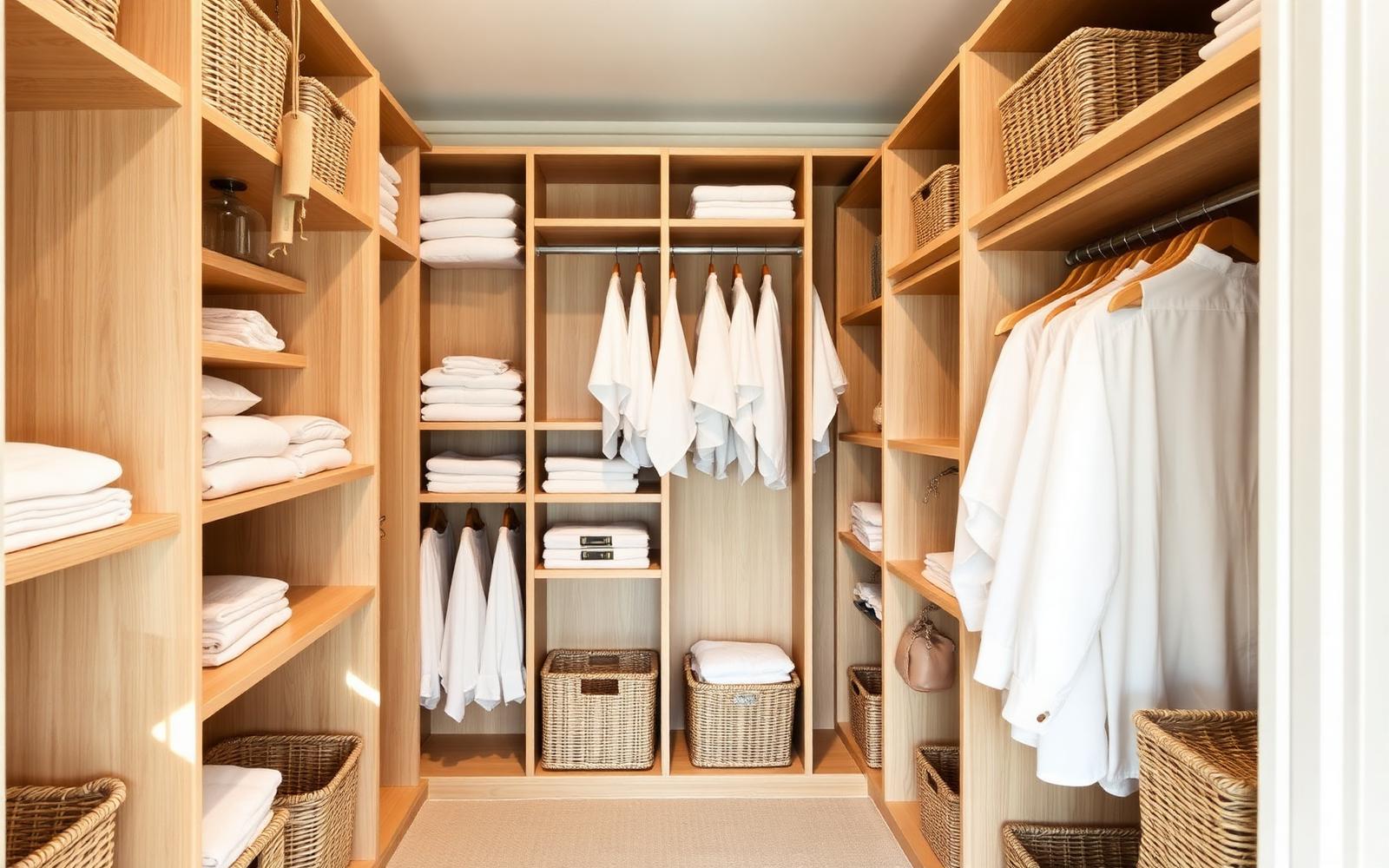
Beautiful storage is only half the battle. We share the functional systems that keep wardrobes, pantries, and entryways in order long term.
There's a familiar cycle with home organization: you spend a weekend making a closet or pantry look incredible, it stays that way for about three weeks, and then it slowly drifts back to where it started. That's not a discipline problem — it's usually a design problem. A space that looks organized but isn't built around how you actually use it will always fall apart eventually.
The systems that last are the ones designed around real habits, not just aesthetics. Here's how to build storage that holds up.
Why Pretty Storage Fails
Matching bins, labeled baskets, and color-coded hangers photograph beautifully, but they only work long term if they match the way you actually move through the space. A system fails when:
- Putting something away is more effort than leaving it out.
- There's no obvious "home" for an item, so it ends up wherever there's room.
- The system was designed around how the space should be used, not how it is used.
The fix isn't more organizing — it's better placement, based on real behavior.
The Core Principle: Reduce Friction
The single most important rule in any long-term storage system is this: the correct place for an item should always be easier than the wrong place. If putting something away takes more steps than tossing it on a counter or chair, the counter or chair will win every time.
This means:
- Frequently used items go at eye level and within easy reach — no bending, stretching, or moving other things out of the way.
- Anything that requires more than one step to put away (open a bin, unstack something, move a divider) will eventually get skipped.
- The "away" spot should be closer than the "leave it out" spot, not further.
Wardrobes: Build Around What You Actually Wear
Closet systems tend to fail when they're organized by category alone (all shirts here, all pants there) without accounting for frequency of use.
- Prime real estate goes to daily rotation. The clothes worn most often belong at the most accessible height and location — not squeezed in with seasonal or occasional-wear items.
- Group by how you dress, not just by garment type. Work clothes together, weekend clothes together, rather than sorting purely by category.
- Rotate seasonally. Off-season clothing should move to a higher shelf, a bin, or a different closet entirely, so the everyday space stays uncluttered without permanently losing anything.
- Give shoes a real system, whether that's a shelf, rack, or slanted storage — shoes without an assigned spot are one of the fastest ways a closet floor becomes chaos.
Pantries: Design for Visibility, Not Just Capacity
A pantry that looks organized on day one but becomes chaotic by week four is almost always a visibility problem — things get pushed to the back and forgotten, then duplicates get bought, and the shelf becomes overstuffed.
- Store by category, at eye level for the most-used items. Snacks, staples, and everyday cooking items should be visible and reachable without digging.
- Use shallow bins or turntables for anything that tends to get lost at the back of a deep shelf — spices, condiments, small packets.
- Decant strategically, not everything. Clear containers for dry goods like rice, pasta, and flour help with visibility and freshness, but don't feel obligated to decant every single item — that's often where a pantry system becomes more maintenance than it's worth.
- Leave a little breathing room. A pantry packed edge to edge makes it hard to see what's there, which leads to both waste and unnecessary repurchasing.
Entryways: Solve for the First 30 Seconds Home
The entryway is the highest-friction storage zone in most homes because it has to absorb whatever a person is carrying the moment they walk in — keys, mail, shoes, bags — often while their hands are full.
- Assign a spot for every category that comes through the door daily: a hook for keys, a tray for mail, a bench or rack for shoes.
- Keep the system within arm's reach of the door itself. If putting shoes away means walking to a closet down the hall, they'll end up by the door instead.
- Build in slack for real life. A single hook for keys works fine for one person, but a household of four needs four hooks, not one shared spot everyone forgets to use.
Maintaining the System Over Time
Even a well-designed system needs a light check-in now and then:
- Do a quick seasonal pass to rotate wardrobe and pantry items as needs shift.
- If the same item keeps ending up in the wrong spot, that's a sign the system needs to move to match behavior — not a sign of a discipline problem.
- Resist the urge to keep adding more bins or organizers. More containers often just means more places for things to get lost, not less clutter.
Why This Matters When You're Selling
Buyers open closets, pantries, and entry cabinets during every showing — storage is one of the most scrutinized parts of a home. Systems that are genuinely functional (not just staged to look tidy for a photo) hold up through weeks of showings without a last-minute scramble before every visit.
If you're getting ready to list and want help building storage systems that actually last through the listing period — not just for one photo shoot — that's exactly the kind of practical setup we help with during a staging consultation.